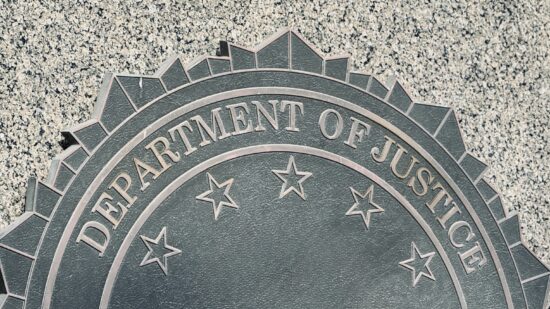
On September 18, 2026, the U.S. Department of Justice (DOJ) announced revisions to its Justice Manual that could have important implications for government contractors facing False Claims Act (FCA) investigations and litigation. The revisions address two issues of particular significance to contractors: the role of agency guidance in FCA enforcement and DOJ’s use of its authority to seek dismissal of qui tam actions.
The changes emphasize a basic principle: Government contractors should only be held accountable for violations of binding legal or contractual obligations, rather than for failing to follow agency guidance that does not have the force and effect of law. At the same time, DOJ has clarified that it should consider seeking dismissal of qui tam (or whistleblower) cases that do not advance the interests of the United States.
For federal contractors, the revisions may affect how compliance programs assess agency guidance, how companies respond to FCA allegations, and how counsel evaluate the government’s position in qui tam litigation.
What Did DOJ Change?
The September 2026 Justice Manual revisions make two significant changes. First, DOJ reinstated and expanded its policy limiting the use of sub-regulatory guidance in enforcement litigation. Under the revised policy, DOJ may not use guidance documents as a substitute for statutes or regulations or treat guidance, standing alone, as creating binding legal requirements that do not otherwise exist.
Second, DOJ clarified its approach to qui tam dismissals. When DOJ declines to intervene in a qui tam action, DOJ attorneys are now directed to assess whether the government’s interests nevertheless warrant seeking dismissal under 31 U.S.C. § 3730(c)(2)(A). If DOJ initially determines that dismissal is not warranted, DOJ may revisit that decision as the litigation progresses.
These changes do not eliminate FCA exposure for contractors. Rather, they provide additional insight into how DOJ intends to exercise its enforcement authority.
Can DOJ Use Agency Guidance to Establish FCA Liability?
Generally, DOJ’s revised policy states that a guidance document cannot, by itself, create a binding legal obligation where none exists in a statute, regulation, contract, or other binding authority. The revised Justice Manual states that DOJ civil and criminal enforcement actions must be based on violations of applicable legal requirements rather than mere noncompliance with federal agency guidance. It further states that DOJ should establish violations by reference to statutes and regulations and may not bring an action based solely on allegations that a party failed to follow a guidance document.
This distinction can be particularly important in the government-contracting context, where contractors routinely interact with agency manuals, FAQs, policy statements, memoranda, procurement guidance, and other materials that may explain how an agency interprets or administers its programs.
The revised policy reinforces the importance of tracing an FCA allegation back to the underlying binding obligation. That analysis may require careful review of the applicable statute and regulations, the terms and conditions of the government contract, contract modifications and incorporated provisions, certifications submitted to the government, applicable FAR and agency supplement provisions, binding agency requirements, and relevant judicial decisions.
Why Does This Matter to Government Contractors?
For federal contractors, the distinction between binding requirements and sub-regulatory guidance can be critical. A contractor may face an allegation that its conduct was inconsistent with an agency manual, policy document, FAQ, or other guidance. The key question is not necessarily whether the contractor departed from that document. Instead, counsel should examine what legal or contractual obligation actually required the contractor to do — or refrain from doing — the conduct at issue.
That inquiry can become particularly significant in an FCA case because the existence of a false claim generally depends on an underlying legal or contractual obligation and the government’s theory concerning the contractor’s conduct. The revised Justice Manual therefore reinforces the importance of identifying the source of the obligation before assessing potential FCA exposure.
Does This Mean Agency Guidance Can Never Be Used in an FCA Case?
No. The DOJ policy draws an important distinction between using guidance as the source of a binding obligation and using guidance as evidence relevant to an existing legal requirement. For example, DOJ states that awareness of guidance may be relevant to whether a party had notice or knowledge of an applicable statute or regulation. Guidance may also be relevant to scienter or to professional or industry standards. Similarly, if a contract incorporates a particular standard or guidance document, the contractual obligation — not the guidance standing alone — may provide the basis for enforcement. Accordingly, contractors should not interpret the revised policy as creating a categorical defense whenever an FCA allegation references agency guidance.
Instead, the more precise question is what is the legal significance of the guidance in the government’s theory of the case? That question may be especially important when a relator or the government relies on agency guidance to establish that a contractor knew its conduct was allegedly improper.
What Changed Regarding DOJ Dismissal of Qui Tam Actions?
The second major revision concerns DOJ’s authority to seek dismissal of qui tam lawsuits. Under the FCA, private whistleblowers, known as relators, may bring qui tam actions on behalf of the United States alleging fraud against the government. DOJ may intervene in a case, decline to intervene, or seek dismissal under 31 U.S.C. § 3730(c)(2)(A).
The revised Justice Manual makes clear that when DOJ evaluates whether to decline intervention, it should also assess whether the government’s interests would be served by seeking dismissal. The policy identifies circumstances that may support dismissal, including cases that lack legal or factual merit, impose unnecessary burdens on the government, duplicate other litigation or investigations, interfere with agency policies or program administration, or otherwise fail to advance the interests of the United States. DOJ may also consider issues involving litigation costs, government resources, national security, and procedural defects.
Importantly, a DOJ decision not to intervene does not automatically mean DOJ will seek dismissal. The revised policy states that dismissal will not be warranted in every declined case and that DOJ may reassess dismissal as litigation develops.
What Does the Qui Tam Policy Mean for Government Contractors?
The practical significance may be greatest for contractors involved in declined qui tam litigation. When DOJ declines to intervene, the relator generally may still pursue the case. The government’s decision to decline therefore does not necessarily end the contractor’s litigation exposure.
The revised policy, however, makes clear that DOJ may consider whether continued litigation serves the government’s interests and may seek dismissal even after declining intervention. For contractors defending a qui tam action, this makes the government’s position an important consideration throughout the litigation — not simply at the intervention stage.
Defense counsel may therefore want to evaluate whether the case has a sufficient factual and legal basis, whether it duplicates an existing government investigation, whether it implicates agency program administration, whether continued litigation would impose substantial costs on the government without a corresponding benefit, and whether other circumstances make dismissal consistent with the government’s interests.
The revised policy does not guarantee dismissal in any particular case. It does, however, provide a clearer framework for understanding when DOJ may consider exercising its dismissal authority.
What Should Government Contractors Do in Response to the DOJ Changes?
The DOJ revisions provide several practical compliance and litigation considerations:
- Separate Binding Requirements from Guidance
Contractors should review compliance obligations with an eye toward distinguishing binding requirements from nonbinding agency guidance. A compliance program should identify the actual source of an obligation rather than assuming that every agency publication carries the force of law. - Review Contracts for Incorporated Guidance
The fact that a document is labeled “guidance” does not necessarily end the analysis. If a contract incorporates a particular standard, manual, specification, or other document, the contractual language may make compliance relevant. DOJ’s revised policy expressly recognizes this distinction. Contractors should thus examine incorporation-by-reference provisions, contract clauses, statements of work, specifications, and other contractual documents when determining whether an agency document has become relevant to a binding contractual obligation. - Preserve the Record Showing How Compliance Decisions Were Made
Because guidance may remain relevant to questions of notice, knowledge, scienter, and industry practice, contractors should maintain documentation demonstrating how significant compliance decisions were reached. That documentation can be important if the government or a relator later argues that the contractor knew or should have known that its conduct violated an applicable requirement. The record may include legal and compliance analyses, communications with contracting officers or agency personnel, contract interpretations, internal policies, training materials, relevant agency communications, and documentation supporting certifications and payment requests. - Reassess Declined Qui Tam Cases
Contractors defending a qui tam case in which DOJ has declined intervention should consider whether the revised dismissal policy creates an opportunity to engage with DOJ about dismissal. That analysis should be fact specific. The revised policy makes clear that DOJ may consider dismissal where a case is meritless, duplicative, resource-intensive, or otherwise inconsistent with the government’s interests. - Avoid Assuming That “Guidance” Means “Irrelevant”
The revised policy is not a blanket limitation on the evidentiary use of agency guidance. A contractor may still need to address guidance cited as evidence of knowledge, notice, scienter, professional standards, or factual context. The appropriate analysis is therefore not simply whether the government has cited guidance, but what role the guidance is being asked to play in the case.
Frequently Asked Questions
- What did DOJ change in the Justice Manual in September 2026?
DOJ revised the Justice Manual to clarify two aspects of FCA enforcement: limitations on using sub-regulatory guidance in litigation and DOJ’s consideration of dismissing qui tam actions that do not advance the interests of the United States. - Can DOJ impose FCA liability based solely on an agency guidance document?
Under the revised Justice Manual policy, DOJ should not bring an enforcement action based solely on noncompliance with guidance where the guidance itself does not establish a binding legal requirement. The department must establish the violation by reference to applicable binding legal requirements. - Can DOJ still use guidance in an FCA case?
Yes. DOJ may use guidance for certain evidentiary purposes, including issues involving notice, knowledge, scienter, professional or industry standards, and legal or factual context. Guidance may also be relevant where a contract independently requires compliance with it. - What is a DOJ qui tam dismissal?
Under 31 U.S.C. § 3730(c)(2)(A), the United States has statutory authority to seek dismissal of a qui tam action. DOJ’s revised Justice Manual instructs department attorneys to assess whether dismissal serves the government’s interests when evaluating whether to decline intervention and permits reconsideration as litigation proceeds. - Does DOJ declining to intervene mean a qui tam case will be dismissed?
No. A declination and a dismissal are separate decisions. DOJ’s policy states that dismissal will not be warranted in every case in which the department declines intervention. - What should government contractors do in response to the DOJ changes?
Contractors should review the source of their compliance obligations, distinguish binding requirements from nonbinding guidance, examine whether relevant guidance has been incorporated into contracts, preserve documentation supporting compliance decisions, and consider the revised dismissal policy when defending declined qui tam litigation.
Bottom Line for Government Contractors
The September 2026 Justice Manual revisions provide greater clarity about how DOJ intends to use agency guidance and its qui tam dismissal authority in FCA matters. For contractors, one of the most important takeaways is the need to identify the actual source of an alleged obligation. DOJ’s revised policy emphasizes that guidance documents generally cannot create binding requirements on their own. At the same time, guidance can remain relevant evidence in an FCA case, particularly where it bears on notice, knowledge, scienter, professional standards, or contractual obligations.
The changes concerning qui tam dismissals likewise warrant attention. A DOJ declination does not necessarily end the government’s involvement with a case, and DOJ may consider dismissal when a qui tam action does not advance the interests of the United States.
Government contractors should therefore view the revisions as both an enforcement-policy development and a compliance-management issue. Companies facing an FCA investigation or qui tam litigation should carefully evaluate the statutory, regulatory, and contractual provisions underlying the allegations — and separately assess what role, if any, agency guidance plays in the government’s theory.
If you have any questions about the foregoing or require assistance, please do not hesitate to contact Aron Beezley or Nathaniel Greeson.